
Many retirees struggle with the psychological shift from working to retiring. After years of budgeting and saving, spending – even responsibly – can feel uncomfortable and even cause real anxiety.
Behavioural experts highlight common hurdles:
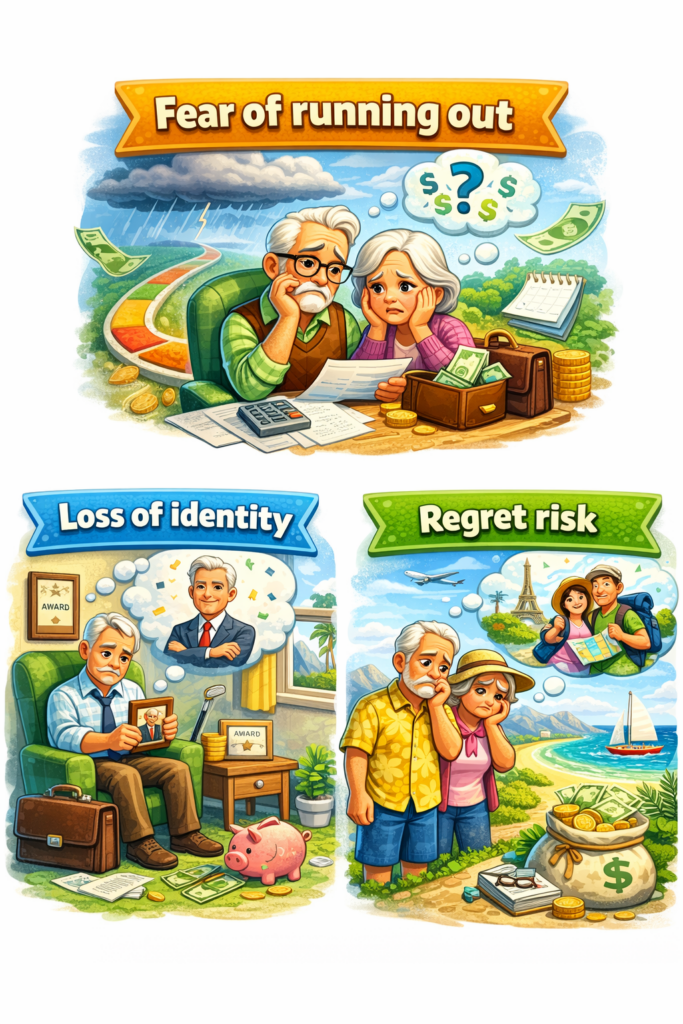
- Fear of running out: Even with ample resources, you worry about living long and not having enough money.
- Loss of identity: Retirement can trigger a sense of disconnection, especially for those whose self-worth was tied to their working life.
- Regret risk: Many retirees reach their later years with most of their wealth untouched, only to realise they could have lived more fully.
Stay adaptable
Retirement is not a fixed destination. Circumstances change, you may see things in a different way, health may become a factor.
Start early
Have conversations about your spending needs and emotional readiness well before retirement begins. Explore what you spend now and what you are likely to spend when retired.
Do a little bit of ‘dreaming’
Imagine yourself in retirement, what you will be doing, what are your interests/passions/hobbies. Then see how these look alongside your spending assessment in retirement.
Frame spending positively
See spending as a reward for your ‘hard work’, not a risk to your security. Spending should link to personal values and life goals which can make you feel purposeful and empowering.
Partial retire
This is a great way to ease into retirement, frees up a day or so to ‘do what you want to do’. Generally, once you have ‘freed up time’ you start to want more, and the change of routine is easier to deal with.
Working because you have to or want to
Do you have to continue working because financially you have to or it is what you want to do. It’s a great feeling if you are doing it because you want to rather than have to. It’s about having choices.
Remember you only have a limited time in this world, is spending a large part of your life at work what you want out of life or are you eating into your ‘healthy retirement’.
Healthy retirement lifestyle
Be realistic about your health and life expectancy. Detailed research has indicated that a healthy retirement is statistically from when you retire up to age 72. At that point ‘health issues’ tend to surface or have been surfacing since retirement.
You may also ‘slow down’ in your activities and take a more relaxed sedately approach in your life. There are exceptions to this but in the main you need to focus on this part of your retirement when assessing your lifetime goals and aspirations.
Retirement is a mindset, not just a milestone
Helping you move from saving to spending isn’t just a technical challenge – from our views it’s a human one. It requires empathy, insight, and the right tools. Because in the end, retirement isn’t just about having enough money. It’s about knowing how to use it well and having the confidence to do so.